Liquid fish oil rather than capsules for your dog
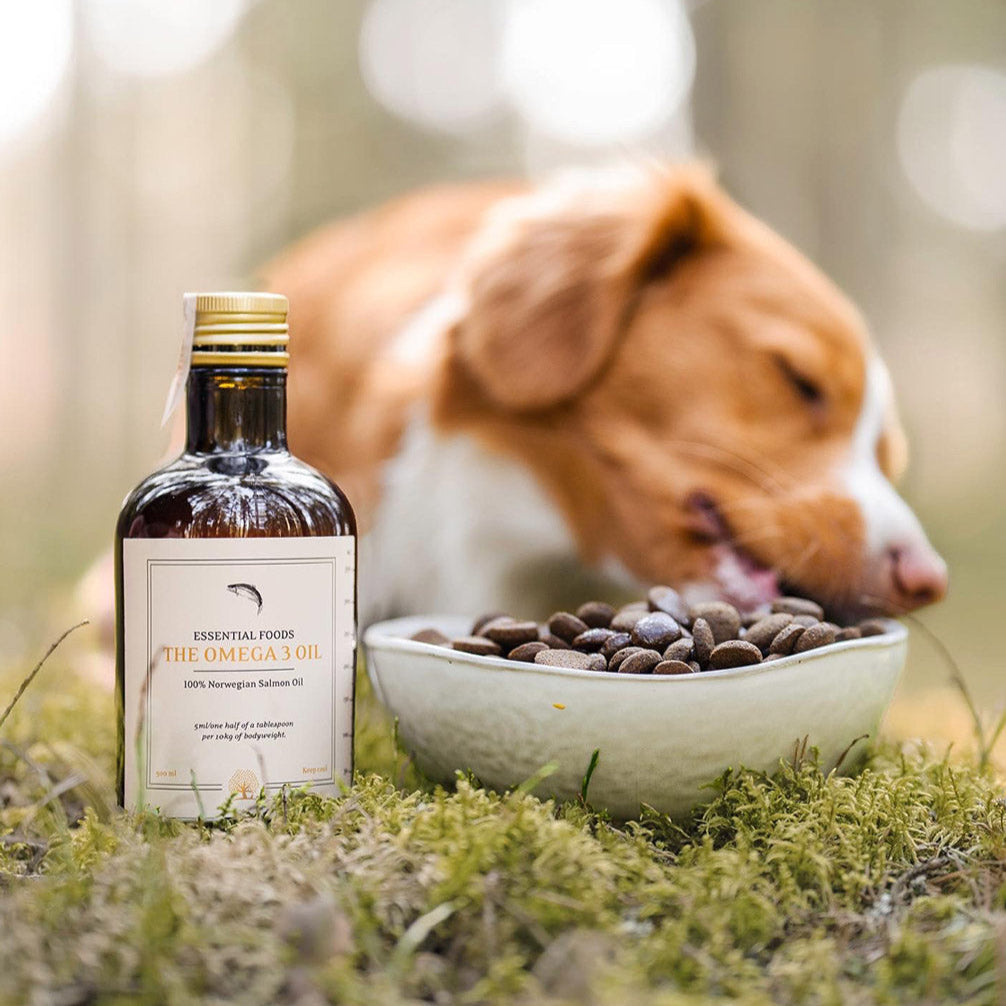
Liquid fish oil is an oil you dose directly on top of your dog's meal, instead of capsules you have to press down or hide in the food. The advantage is simple: you hit exactly the amount your dog's size requires, and most dogs eat the food without trouble, because the oil blends in with the flavour they already know. For a small dog you measure a few drops or a couple of millilitres, for a large dog more, and you control it with the pump or spoon without having to count in whole capsules.
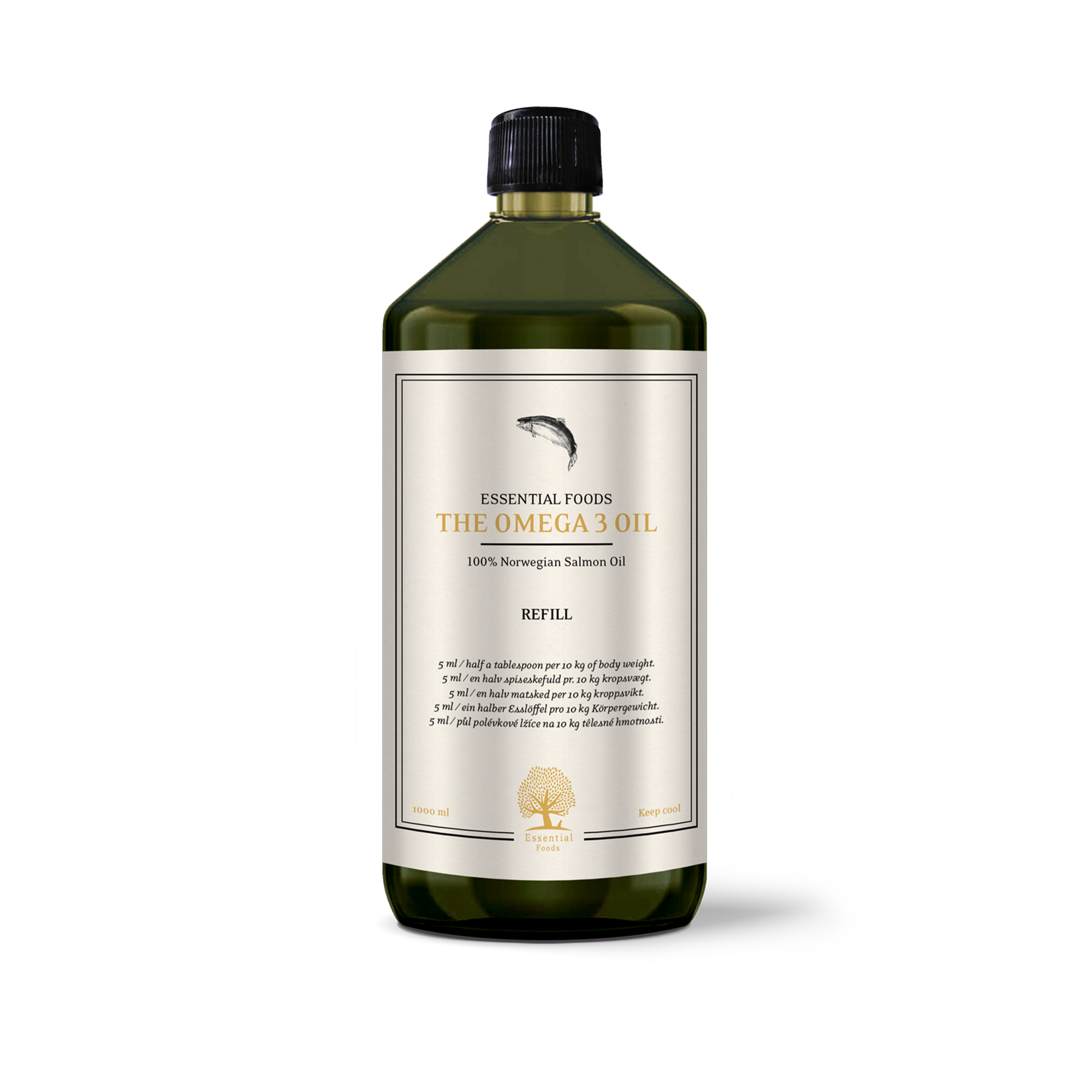
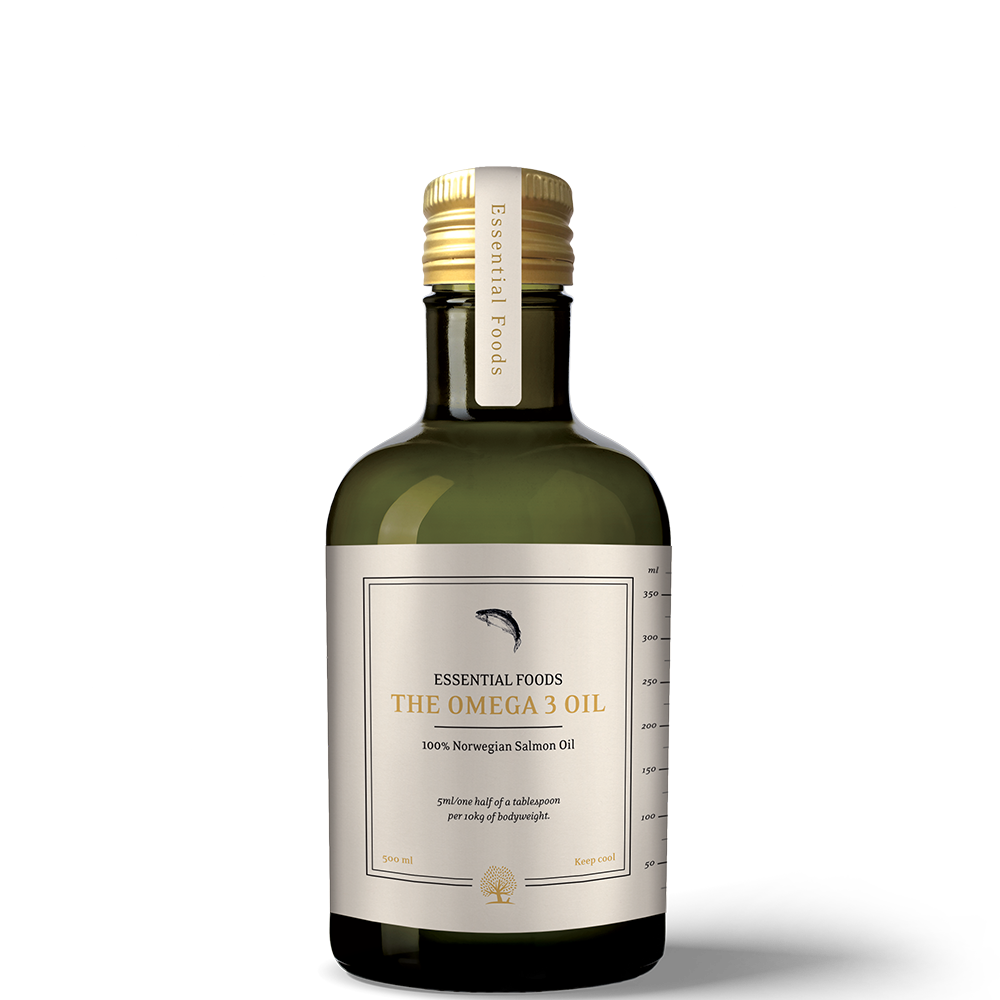
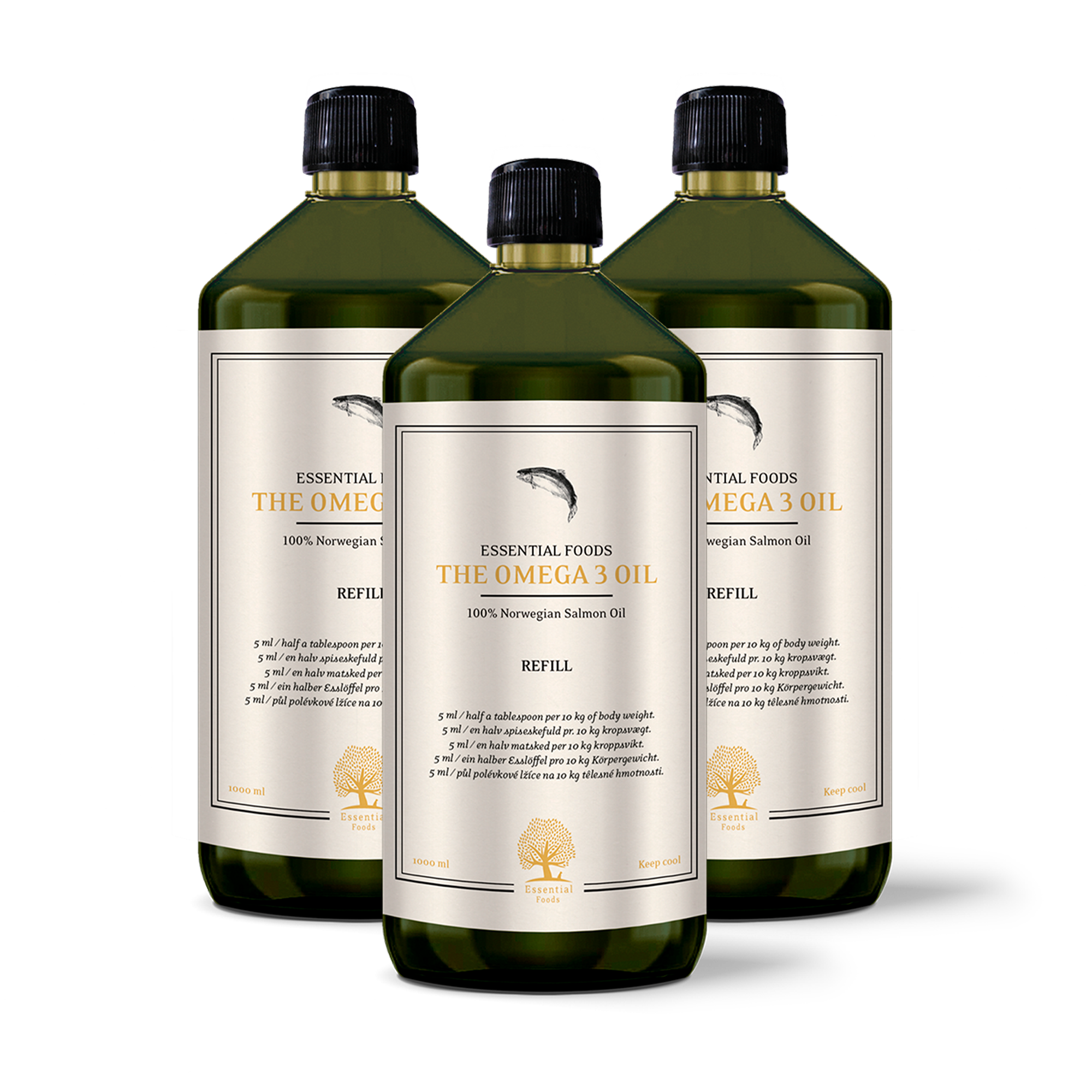
This collection consists of the omega 3 oil, which is a pure, liquid fish oil intended as a daily supplement on top of your dog's food. The oil is available as THE OMEGA 3 OIL 500ML and THE OMEGA 3 OIL 1L, and if you have several dogs or a large dog that empties a bottle quickly, it is also available as THE OMEGA 3 OIL, 1L x 3.
What omega-3 from fish oil does for your dog
Fish oil is interesting because it contains the two long-chain omega-3 fatty acids EPA and DHA, which the dog does not produce in sufficient quantities on its own. EPA is particularly linked to the body's anti-inflammatory processes, while DHA is part of the brain and retina. In practice it is therefore a supplement many give for joints and movement, for coat and skin, and for the heart and nervous system.
One area where supplementation with EPA and DHA is well documented is joints in dogs with osteoarthritis: several controlled studies indicate that omega-3 can contribute to less lameness and better mobility over time. For dogs with dry, flaky skin or a dull coat, the oil is often used to support the skin barrier. The effects do not appear from one day to the next but build up over weeks, so it is a daily, ongoing supplement rather than a quick cure. If you want the full background, we have gathered it in what is fish oil good for.
How to dose according to your dog's weight
The right amount depends on your dog's weight, so liquid oil is practical precisely because you can scale up and down without splitting capsules. Always follow the dosing instructions on the bottle, as they are calibrated to this particular oil's content of EPA and DHA. As a rule of thumb, you give less to a small dog and increase according to body weight.
If you are starting with a dog that has not had fish oil before, it is a good idea to begin at the low end and let the stomach get used to it over a few days. Too high a dose too quickly can cause loose stools. If you are in doubt about the right daily amount of food and supplements for your particular dog, you can read more in how much should a dog eat, and if you have a dog with special needs, such as being overweight or a health condition, it is a good idea to discuss the dosage with your vet.
Why purity and freshness determine quality
Two things distinguish a good fish oil from a bad one: how pure the raw material is, and how fresh the oil is when the dog gets it. Fish high in the food chain can carry heavy metals and environmental toxins, so a quality oil is cleansed of these. Just as important is oxidation: fish oil goes rancid when exposed to oxygen, light and heat, and rancid oil tastes bad and loses its value. That is why low oxidation at bottling and tight packaging are crucial.
This is also why taste is a useful indicator in everyday life. A fresh fish oil smells mildly of fish, not sharp or rancid, and the dog eats it without hesitation. If your dog suddenly starts refusing the oil it usually takes, it can be a sign that the bottle is getting too old. You can read more about what characterises a good oil in which fish oil is best for dogs.
Storage and shelf life after opening
Liquid fish oil is more sensitive than dry food, precisely because it oxidises once the bottle is opened. Keep the bottle tightly closed between uses, and store it cool and dark. Many choose to put it in the fridge after opening to slow down oxidation, which extends the time the oil stays fresh. Always follow the manufacturer's storage instructions and the recommended period after opening stated on the bottle.
Here the bottle size plays a real role. If you choose the very large bottle for a small dog, you risk the oil going old before it is used up. A small dog is therefore often best served by THE OMEGA 3 OIL 500ML, so the bottle is emptied while the oil is still fresh, while a large dog or a household with several dogs gets through a litre bottle faster and can make use of THE OMEGA 3 OIL, 1L x 3.
Liquid oil together with your dog's daily meal
Fish oil is a supplement, not a replacement for a full meal, and it works best on top of food that is already balanced. If you already give a meal with a good fatty acid content, many use the oil as an extra boost in periods when the dog needs it, for example an older dog with stiff joints or a dog with a dry coat in winter.
If you want to build the daily meal underneath the oil, you will find the full range under all meals for dogs, and if your dog has reached an age where joints and movement take up more focus, you can see food for senior dogs under senior. Besides oil, you will also find other daily supplements under daily dietary supplement, if you want to support your dog on several fronts.